
Easy Home Improvement Projects for Beginners (That Actually Make a Difference)
Feeling overwhelmed by a home that feels dated and doesn't feel like yours yet? You're not alone — and you don't need a big budget or a contractor to change it. In this post I'm sharing 10 beginner-friendly home improvement projects I've done myself, in my own home, that made a bigger difference than I ever expected.
HOME DIY & DECOR
5/6/20269 min read
Where Do You Even Start? (Here's What Worked for Me)
When we bought our house, it came with a bright yellow hallway, a red dining room, a brown kitchen, and warm light bulbs in every single fixture that made the whole place look like it was permanently lit by a sad, tired lamp. It was a lot.
Before we even moved in, we painted almost every room. Not because we were ambitious DIYers with a plan — honestly we just couldn't live with the yellow hallway. But here's what happened: once the paint was fresh and we swapped out those warm bulbs for bright white ones, it looked like a completely different house. Not a renovation. Not a gut job. Just paint and light bulbs.
That was the moment I realized how much power the small stuff has.
I'm not a professional. I didn't grow up with a toolbox in my hand. I grew into this slowly, project by project, over years — with a few embarrassing detours along the way (more on that in a minute). What I've learned is that you don't have to do everything at once. Small but steady is how a home actually transforms.
So if you're staring at your dated space and have no idea where to start, this post is for you. These are the beginner home improvement projects I wish someone had handed me when I first started in order of how scary they are, starting with the least intimidating thing you can possibly pick up: a paintbrush.
Table of Contents
Heads up — some links in this post are affiliate links, meaning I earn a small commission at no extra cost to you. I only share things I'd genuinely text a friend about.
Start Here: Painting Projects for Beginner DIYers
I say this with full sincerity — if you have never done a single home improvement project in your life, start with painting a room. It is so much less scary than it looks, the margin for error is forgiving, and the payoff is enormous.
Paint a Full Room
Here's a tip I wish someone had told me earlier: bedrooms are easier to paint than smaller rooms. It sounds counterintuitive, but smaller rooms like bathrooms and laundry rooms have more corners, more trim to cut around, and less open wall space to work with. More corners means more patience required. A bedroom gives you long, open walls that build your confidence fast.
You don't need to spend a lot either. Check what you already have on hand first — leftover paint from a previous project, or a can sitting in the garage you forgot about. Better yet, ask family or friends if they have any paint they're trying to get rid of. You would be amazed how much paint just sits in people's basements going unused. Be sure to check out my post on how to paint a room for a step by step guide.
Paint an Accent Wall
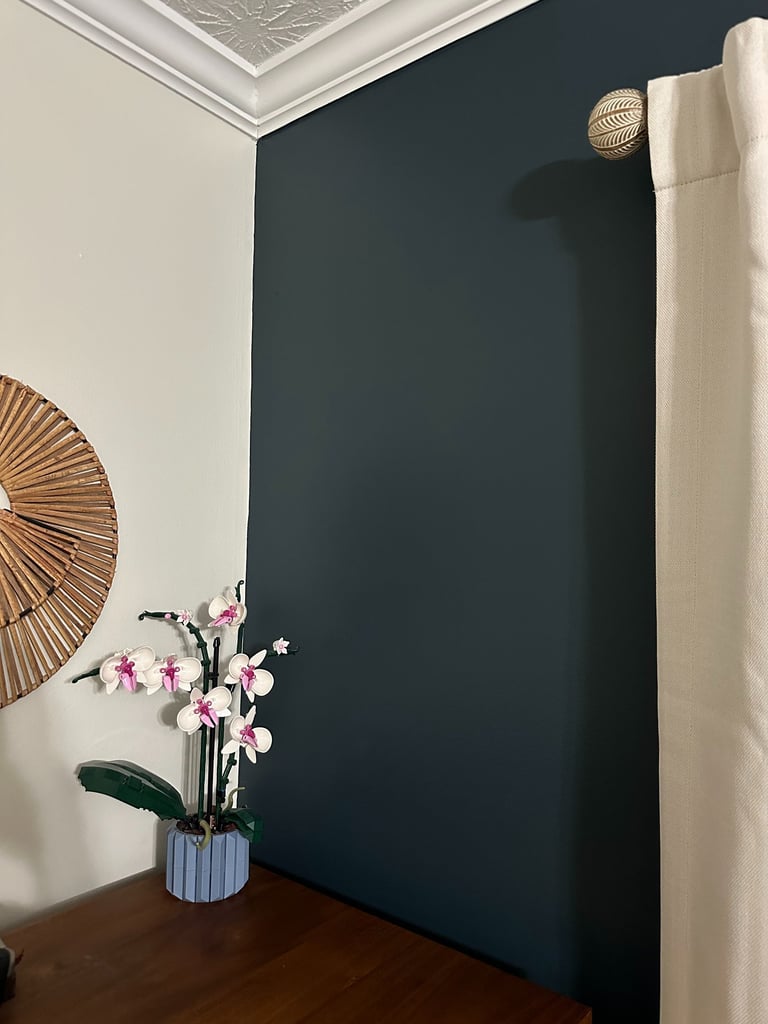
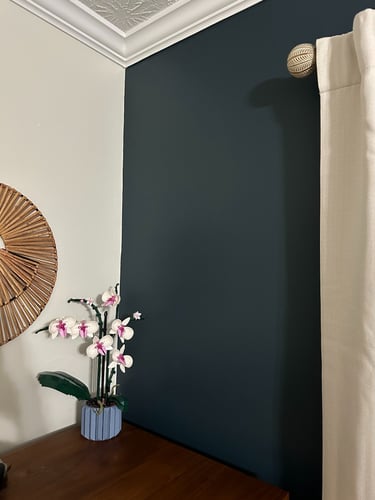
Once you've painted a full room and realized it wasn't terrifying, try an accent wall. Pick one wall and paint it a completely different color than the rest of the room. High contrast works best — think deep navy next to a soft cream or beige. I did exactly this in my bedroom and the difference was dramatic. One wall, one afternoon, and the whole room felt intentional and designed instead of just... painted.
Touch Up Your Trim and Doors
This one gets overlooked constantly and it should not. Scuffed baseboards, dinged door frames, and yellowed trim make a space feel worn down even when everything else looks fine. Grab some wood putty for any nicks or holes, let it dry, sand it smooth, and paint over it. Bright white is almost always the right call for trim. The details are what separate a space that looks done from one that just looks painted.
If you already feel confident painting and are looking for a challenge, check out my post on DIY Wall Stenciling for Beginners, which shows how I completely transformed my half bath with left over paint and an $8 stencil.
Build Some Confidence: Easy DIY Decorating Projects for Beginners
Once paint is in your repertoire, these next projects will feel surprisingly doable — especially because some of them have no rules at all.
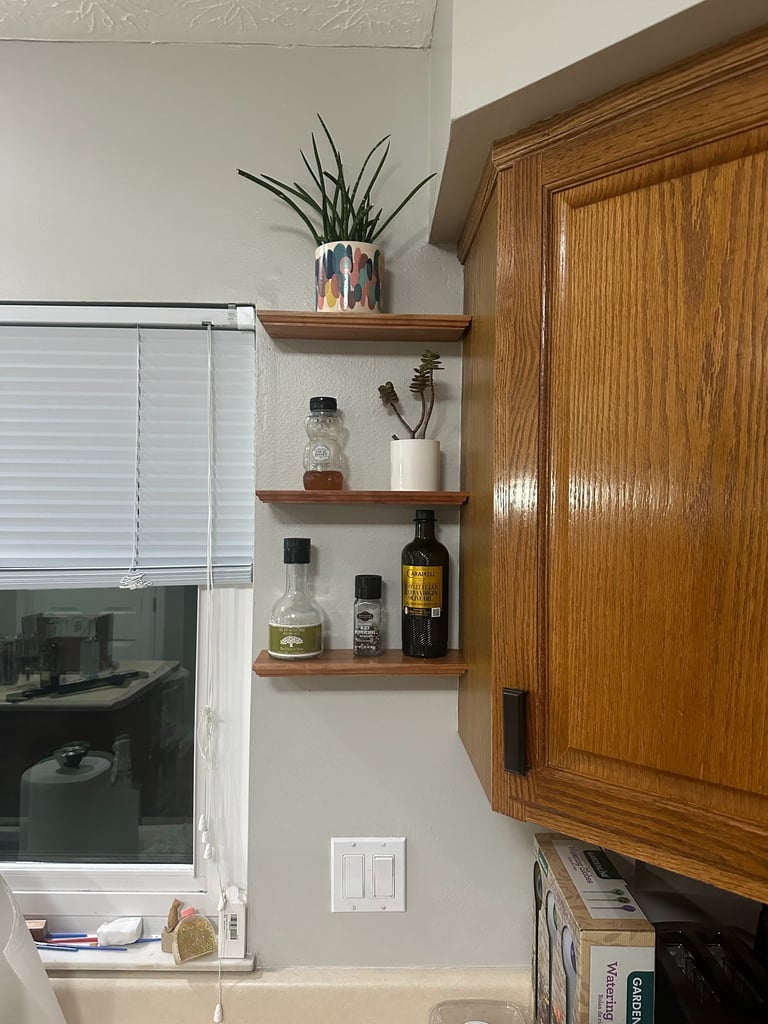
Install Floating Shelves
Floating shelves are one of those projects that look complicated but really aren't once you've done it. They save surface space, elevate a plain wall, and give you somewhere to actually put things. I've installed them myself and I promise the most intimidating part is finding the stud — and even that gets easier every time. My dad actually handmade these shelves, but you can find a similar look here.
Create a Gallery Wall
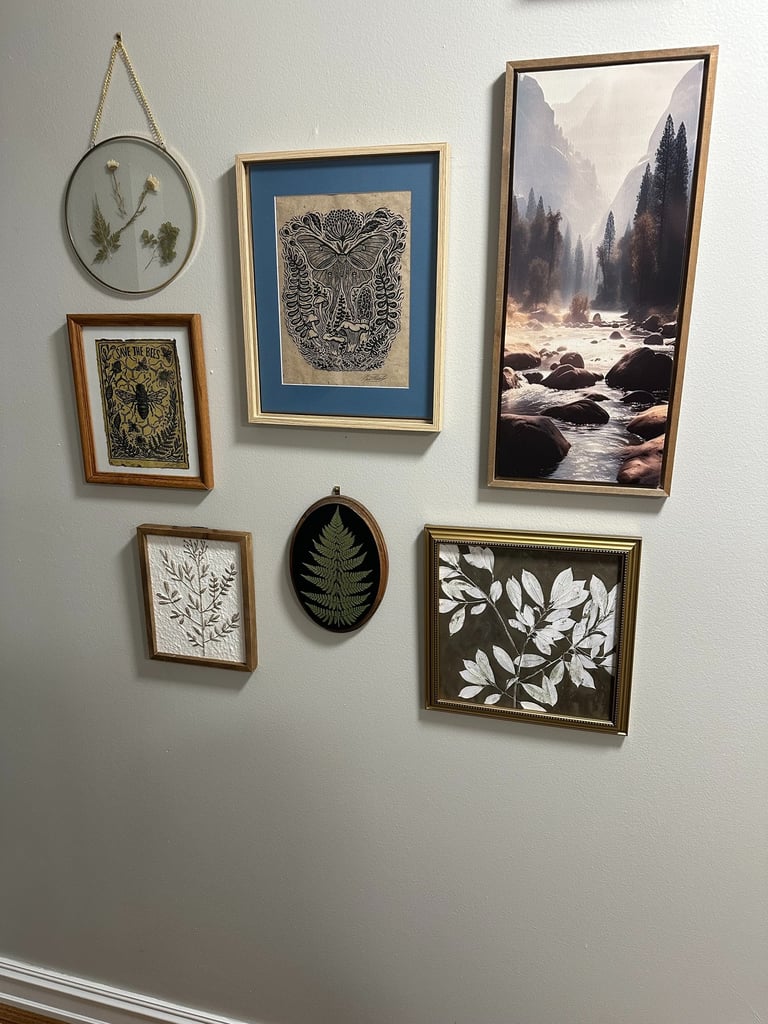
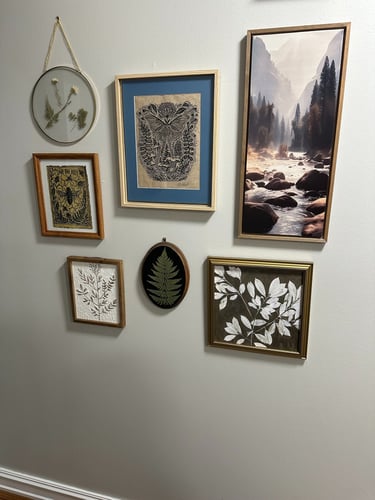
Got a big blank wall that you've been staring at for months not knowing what to do with it? Gallery wall. This is genuinely one of the most beginner-friendly projects on this entire list because there are no rules and no precise measurements. You cannot mess this up.
The trick that makes it so much easier: find one piece you love first — a print, a photo, a piece of art — and build everything else around it. Let that anchor piece set the mood, the color palette, and the vibe. Everything else just has to feel like it belongs in the same family.
Lay everything out on the floor before a single nail goes in the wall. Rearrange it until it feels right. Then hang it. That's genuinely the whole process.
Quick DIY Decorating Projects for Beginners
These last projects require the least skill and deliver some of the highest returns. They're the kind of thing you do on a Saturday afternoon and then stand in the doorway staring because you can't believe how different it feels.
Change Your Shower Curtain
I mean it when I say this is the most underrated home refresh there is. A fresh shower curtain is almost as transformative as a fresh coat of paint and costs a fraction of the time and effort. If yours is old, dingy, or just giving nothing — swap it. Today. Right now even.
Swap Your Bathroom Cabinet Hardware
Changing hardware — drawer pulls and cabinet knobs — makes a bathroom feel completely updated without touching a single tile or fixture. I'd specifically recommend starting with a bathroom rather than a kitchen for your first hardware swap. Kitchens can get complicated fast; some hardware requires drilling new holes, the sizing has to be exact, and suddenly a simple swap turns into a whole project. Ask me how I know. I bought a set of kitchen hardware from Hobby Lobby, loved them, and returned every single one because I wasn't ready to commit to the drilling situation.
Bathrooms are lower stakes, lower commitment, and lower cost. Hobby Lobby is a great place to start — they carry really unique options at prices that don't make you nervous to try something new.
Switch to Bright White Light Bulbs
Warm bulbs make your home look yellow. I know that sounds dramatic but it is true and it was true of our house when we moved in. Swapping to bright white bulbs is a five-minute project that costs almost nothing and makes every room feel cleaner, bigger, and more modern. Do this in every room and then wonder why you didn't do it sooner.
Update Your Light Switch Covers
While you're at it — look at your light switches. If they're yellowed, cracked, or just the sad beige builder-grade plastic that came with the house, replace them. A multipack runs just a few dollars at any hardware store or Amazon. It takes thirty seconds per switch. And somehow it makes a room feel finished in a way that is hard to explain until you've done it. I just recently updated one of mine in my half bath using this $7 one and it has made such a difference.
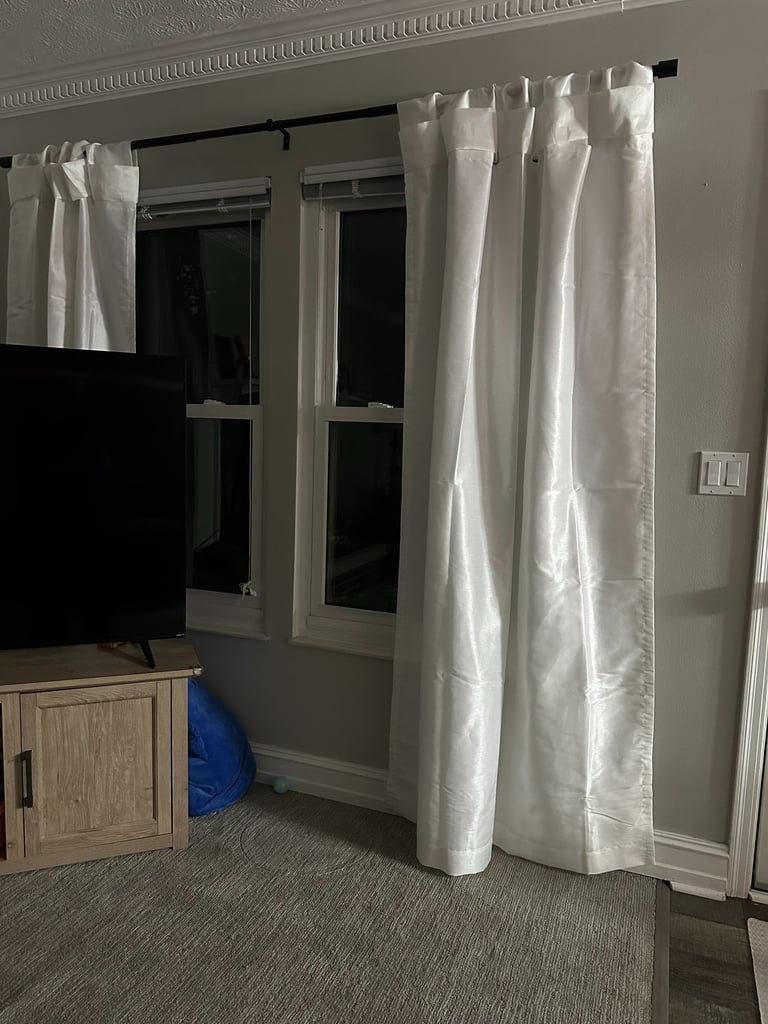
Hang Curtains (Yes, Actually Do It)
I saved this one for last because I need you to learn from my mistakes. I waited six years to hang curtains in my home. Six. Years. My excuse was that my cats or my kids would pull them down. They have not touched them once. Not once.
Curtains make a room feel finished, warm, elevated, and intentional in a way that nothing else quite replicates. The day I finally hung them I walked around my house genuinely embarrassed at how long I had lived without them — and also kind of amazed at how good everything looked. It is one of the highest-impact, lowest-skill projects on this entire list and I will not stop telling people to just do it.
I actually got these curtains from a family member who ordered the wrong item, but you can find the hardware I used here.
Basic DIY Tools Every Beginner Homeowner Needs
One of the best things about starting your DIY journey with projects like these is that the same small set of tools shows up again and again. You don't need a garage full of equipment. You need a solid starter kit — and honestly most of it you can grab on Amazon for less than you'd think.
Heads up — some links in this post are affiliate links, meaning I earn a small commission at no extra cost to you. I only share things I'd genuinely text a friend about.
🖌️ For Painting
Paint Brush and Roller Set: A good brush and roller set makes all the difference between a smooth finish and a streaky mess.
You'll also want a paint tray, and a drop cloth to save your floors and your sanity (skip the painters tape - it is more of a headache than not).
🔧 For Shelves, Hardware, and Curtains
Rigid Drill/Driver with Charger : A drill is the one tool that will unlock more projects than anything else in your house. If you don't own one yet, this is your sign. Modern drills are beginner-friendly, lightweight, and not nearly as intimidating as they look once you've held one. I've owned this one for years and it has never let me down.
Drill Bit Set: If you're buying a drill, you'll want to buy a drill set as well. It doesn't have to be the same brand. I won the Rigid Drill with the RYOBI Drill Set and they work perfectly together.
Stud Finder: A stud finder is essential for floating shelves and curtain rods — hanging things into drywall with no stud behind it is how you end up with a shelf on your floor and a hole in your wall. Ask me how I know.
Level: A level keeps everything straight. Your eye lies to you every single time. A level does not.
A Screwdriver Set: Both flathead and Phillips — gets used constantly for hardware swaps and light switch covers. A basic set covers almost everything you'll encounter as a beginner.
📐 For the Gallery Wall
Picture Hanging Strips: The one tool that makes a gallery wall dramatically less stressful is a set of picture hanging strips — the kind that go on without any nails at all. Perfect for renters or anyone who wants to rearrange without commitment.
Hardware Set: For home owners wanting something a little more sturdy than hanging strips. This set gives you everything you'd need to hang any type of picture.
Measuring Tape: You should have one of these on hand for just about every project.
💡 The Honest Starter Kit List
If you want to grab everything at once and just be done with it, here is the no-overthinking starter kit for every project in this post:
Angled paintbrush + roller set
Cordless drill
Stud finder
Torpedo level
Screwdriver set
Picture hanging strips
Measuring tape
You don't need all of this on day one. Start with what the project calls for and build your kit as you go. By the time you've worked through this list you'll have everything you need — and you'll actually know how to use it.
Your DIY Home Improvement Journey Starts Here
Every single project on this list taught me something. Painting taught me patience and prep work. Floating shelves taught me how to use a drill and find a stud. Hardware swaps taught me that commitment matters — and that it's okay to return something that doesn't feel right yet. Curtains taught me to stop waiting for the perfect moment that is never coming.
You don't need to be handy. You don't need experience. You just need to pick one thing and start. The skills build on themselves naturally and before long you'll be standing in a home that feels completely different — not because you gutted it, but because you showed up for it slowly, steadily, and on your own terms.
Small but steady. That's how a house becomes a home. 💛
STAY CONNECTED
GET IN TOUCH
Questions or ideas?
AngelaMarie@mommakeshome.com
© 2026. All rights reserved